
Whose Mission Is “Mission Critical”?
There are three missions in Mission-Critical consulting: customer, company, and community. Here’s how to test what’s real versus fluff.
What does “Mission Critical” mean? In most cases, it means “If this fails, the customer’s operation stops.” It labels the cost of failure, and the mission part belongs to the customer.
It’s more rare in the sense of being critical because it serves a company’s own reason for existing. When it does, it has big implications for decisions that cost money and govern product launches or service provision that’s fundamental to the company’s existence.
In infrastructure- and place-focused development, a third mission is emerging that belongs to towns, communities, and neighbors. AI has triggered a data center construction boom, and the placemaking side of it hasn’t caught up to the technical demand. This is causing friction with communities and their residents across the country. How are those missions related across industries, and what’s the daylight between them?
If we zoom out, “Mission Critical” is a stack of missions working together: (1) your organization’s mission, (2) your client’s mission, and (3) the mission of the communities they serve (the people who use what’s built and the people living within its realm of influence). This stack is what makes Mission-Critical software development parallel to Mission-Critical facilities and infrastructure development. Sometimes, the users and neighbors are the same people. But other times, they aren’t: a data center’s users are everywhere, and neighbors live around it.
Together, they connect purpose to execution across communities, technology, providers, and service providers that bring products and places to reality. Providers get hired to fulfill their customer’s mission. The provider’s mission guides their own operations, and decision-making about what happens when the customer and the community want different things. The community’s mission decides what gets approved, adopted, and used.
Here’s the kicker: your customer pays for the work, but the community can stop it for a number of reasons, many of which are beyond your control. That’s why the critical function of Mission Critical is mission alignment, and the gaps that exist between them are what cause projects to stall.
How Did A Risk Label Become A Business Unit?
The earliest record of “Mission Critical” in the Oxford English Dictionary comes from Aviation Week in 1976. Business IT first used it to reference transaction systems. Today, it’s the hot new term for AI data centers (although whether or not they’re critical depends on if you’re asking the people who build them, the people who use them, or the people who live next to them). Entire companies and business units are now being built around a Mission-Critical focus, especially in construction and engineering, although it means different things for infrastructure versus technology. In both contexts, it’s a risk label: software companies use it to sell products, and engineering firms use it to sell services. The demand for AI is forcing a convergence of tech-focused with built environment infrastructure-focused consulting, resulting in massive global growth of technology-related construction.
US data center construction reached $85B annually in August 2026, up 73% from 2025 and 823% since the beginning of 2021. ENR’s Top 400 contractors grew revenue by 11.8% to $671.4B in 2025, propelled by a “surge of data center projects.” On their earnings call in Q1 2026, Stantec identified mission-critical facilities as a primary driver of long-term demand for its services.
Software sells Mission Critical in a similar manner. Constellation Software is “a leading acquirer and provider of mission-critical, high-impact software solutions and services to specialized industries.” Tyler Technologies states that “our solutions deliver mission-critical technology to support the essential functions of government, including public safety, justice, public health, taxation and budgeting.” According to Tyler’s annual report, client turnover hovers steadily around 2% a year. Their mission statement is a bridge from their customers to their corporate reason for existing: “We empower the public sector to create smarter, safer, and stronger communities.” In both examples, “Mission Critical” describes the operations of their customers, but Tyler’s mission goes beyond the agencies they sell to by speaking to the communities they serve.
The label matters to buyers and investors because it indicates switching costs: buyers seek assurance that operations won’t stop, because if their systems were to be replaced, it would require retraining staff, migrating data, and onboarding new partners, all of which increase the risk of outages. After all, customers who can’t leave are more likely to accept price increases and larger scopes of work. Investors bet that mission-critical spending is likely among the last things that will get cut in a downturn, because it’s both operational protocol and risk mitigation operating as a package deal.
The mission shifts across industries, but it’s often defined and owned by entities that aren’t providing the product or service:
Mission Criticality Across Industries
| INDUSTRY | WHAT “MISSION” MEANS | HOW IT’S MEASURED |
|---|---|---|
| Defense & Aerospace | Accomplishing a defined objective | Mission success, end state |
| Public Safety | Keeping first responders connected | Push to Talk standards, FirstNet |
| Data Centers | Keeping the IT load powered and cooled | Uptime Institute Tiers, N+1 and 2N redundancy |
| Healthcare | Keeping care running | Clinical system uptime, overlap with safety critical |
| Financial Services | Keeping transactions and settlement running | Recovery Time Objectives, Recovery Point Objectives, regulatory resilience rules |
| Enterprise Software | Keeping the customer’s workflow running | Service Level Agreements, Service Level Objectives, retention |
| Data Center Campuses | Client facility, land, power, water, and local approvals | Time to power, time to approval, build-ready conditions of the site |
| Public Works | Critical infrastructure for daily life: water, roads, power | Reliability of water and power resources, system resiliency in catastrophic failure |
| Military Bases | The branch/base’s mission | Days a base can run critical missions in catastrophic grid or resource failure (min. 14) |
Does Purpose Work When It’s Fluffy?
Service and contracting firms sell certainty to clients whose mission depends on uptime, but that doesn’t inform strategic choices when the people and entities they’re serving want different things.
A 2019 Organization Science study by Gartenberg, Prat, and Serafeim measured 456,666 employee surveys from the Great Place to Work Institute to explore how employees feel about their work. Their findings showed an organization’s purpose was not a predictor of financial performance, but Purpose paired with Clarity was: when employees said that management had a clear view of company direction, it was an indicator of stronger results. A 2018 study in the MIT Sloan Management Review examined 124 organizations and showed that only 28% of executives and middle managers responsible for executing strategy could list three of their company’s strategic priorities. A separate look at Gallup’s 2025 data indicated that only 32% of US employees felt a strong connection to their organization’s mission.
Together, these expose a gap of Mission Criticality: purpose doesn’t reach the people who do the work. Consultants are usually focused on downstream optimization for the customer’s mission, but can’t touch upstream optimization for their own, the companies they serve, or the people that perform the work itself. If the meaning of Mission Critical is to focus on the consequences of failures that stop the operation, then a “both directions” approach is critically necessary to span from operational tactics to foundational organization.
Corporate mission statements are permanent and universal, so they often don’t settle choices about the organization; they only determine general direction. Military and NASA missions have an end state and a deadline; command defines the purpose, desired result, and time parameters, while the operators solving the problem determine the method so their teams can execute the mission even if the plan changes without needing to receive new orders. Without this type of staged definition and protocol, the risk of organizational dissonance between purpose, focus, and execution increases.
What Proves a Mission?
In software development, a Service Level Objective creates reliability targets, like 99.9% of successful requests in a month. The remaining 0.1% is the error budget that determines the acceptable threshold for failure. For Google, solutions continue to ship as long as there’s remaining budget; if it’s spent, all releases stop until they realign the service with SLO targets.
This is the closest example that connects tech-focused mission criticality to military-esque operational chains, because a business decision about how much failure customers will tolerate becomes rules that govern deployment. The proof points here manifest as contractual uptime Service Level Agreements, public status pages, incident reports, and security certifications like SOC and FedRAMP that buyers check before trusting vendors with critical systems.
Building architecture has its own version of this. Failure tolerance becomes design rules through Uptime Institute tiers that state what can be maintained without shutting down (Tier III) and what keeps running when single failures happen (Tier IV). After that, commissioning stages prove full operational capability before an owner assumes control.
A company’s purpose can also be proved as cost. In 2014, when CVS rebranded as CVS Health, it estimated that halting tobacco sales would lose around $2B revenue annually. But it was a strategic decision about the identity and future of the brand. Larry Merlo, CVS CEO, said “the sale of tobacco products is inconsistent with our purpose.”
When Mission Criticality is foundational to operations, it demands a re-examination of an organization’s guiding principles based on the evidence of their operational reality. Bringing purpose and place in the world into more clear focus creates a mandate to move visioning from “marketing fluff” to “clarity of focus based on proof.” Connecting the purpose to tactics more tightly closes the loop, and improves clarity across the strategic system by keeping each other honest. Tangible proof for customers makes purpose statements read less jargony by connecting them to the reality of budgets, pay, and deployments, helping a mission govern more tactical executions, stick to “the bottom line”, and answer bigger questions like “why are we doing this?” and “what are the impacts on our organization, customers, their customers, and the communities we’re working to serve?”
This kind of foresight lets brands change the perception of Mission Criticality internally and externally by shaping the story around operations, impact, and “what happens in the good times and bad times” for employees and stakeholders alike.
CrowdStrike was a perfect example. When 8.5 million Windows devices were impacted by a faulty update in July 2024, the deep integration of the product survived catastrophic failure because it was extremely hard to remove. They also paid customers to stay on board for the solution with discounts and additional modules for longer contracts, and retention was north of 95%. Their brand didn’t save it, but it did inform how the apology, root-cause reports, and retention offers were crafted. Their tactics and product were mission critical for their customer operations, but their brand was mission critical for sustaining customer relationships.
Why Are Communities Pushing Back?
In land development, Mission Critical goes deeper than consultants and clients to the community. Here, they have a loud voice and an important role to play in the process of development and approval. Foundationally, Mission Critical in land development refers to a site needing to work before a facility can exist, and how it persists under system duress. This means power, water, permits, and approval, expanding the scope from software’s “this won’t fail” to include “this gets built on schedule and within budget, and failure tolerance under duress.”
The Grid and the Town are a dual focus in Mission Critical infrastructure engineering that software doesn’t often have to consider. It takes 18 to 24 months on average to construct the shell of a data center in most US markets, but the national average wait for power is four years (according to JLL’s 2026 outlook). New power plants serving data center growth zones in Texas and the mid-Atlantic are waiting three to four years for connection.
Local opposition is also growing, which further complicates the engineering and political sides of approval gateways. According to Data Center Watch, opposition groups have more than doubled in the past year, from 390+ at the end of 2025 to 830+ by March 2026 and continue to grow with midterm elections looming. Together, they blocked or delayed at least 120 data center projects worth more than $190B in Q1 and Q2 of 2026, with communities voicing concerns about power bills, water, noise, and who gets left on the hook for power grid upgrades.
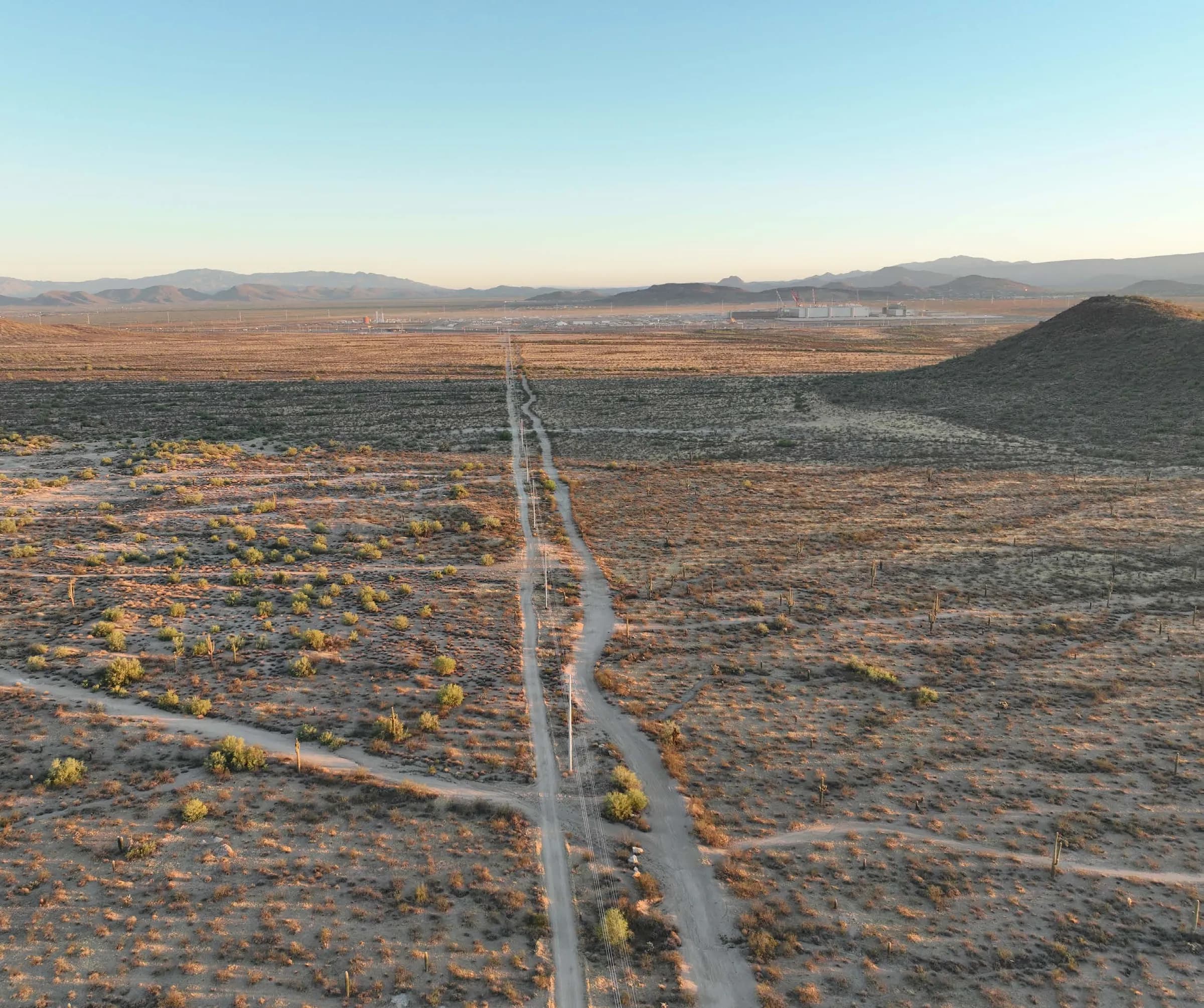
The Tucson City Council voted against the Project Blue data center campus in August 2025 after residents rejected the secrecy surrounding the deal and the plan to cool it with drinking water. The developer responded by moving its proposal to Pima County and developing a new plan for air-cooled design that wouldn’t use water, a promise that it wouldn’t seek property tax breaks, and a $15M pledge with a dedicated $5M for local science and trade education. The city’s mission altered the original plan, and the county approved a binding agreement on county-owned land in a split 3-2 vote in December 2025 despite persistent local opposition.
What’s the Cost of Consent?
Consent is beginning to be priced into the client side as well, with new commitments creating additional tangible costs that ripple into the mission. In January 2026, after experiencing extreme pressure from local municipalities and the White House, Microsoft made a pledge to pay its full power costs so residents wouldn’t foot the bill, pay full local property taxes with no tax breaks, replenish more water than it consumed across all operational locations, and provide local liaisons at every major site. After that, it ended the practice of nondisclosure agreements with local governments for its projects.
Data Center Watch found that “the mere rumor of a data center was enough to trigger organized resistance,” meaning consent risk is present before the first filing. That’s why some engineering firms hit the ground early to perform site selection services long before the project begins. A data center waits on connection to the grid and approval from the town, but Speed to Power and Speed to Approval are two separate services. Speed to Approval requires commitments a town can check at a base level, but what becomes more important is proactive community engagement, active listening, and straightforward communication to understand local needs and get ahead of a project’s story before the rumors start to tell it for them and opposition organizes around it.
In land-based consulting, companies like Stantec have promised to “design with community in mind,” which defines community as inclusive of their clients. Promises like these are being tested in new ways when the tech clients and host municipalities disagree, because both are part of their “community.” In these cases, Mission Criticality must be more clearly connected from intent to tactical execution and grounded in real data, because community consent is part of the critical path from vision to tactical operations. Without it, disagreements between providers and constituents surrounding a project become one of the biggest schedule risks (next to power). Stantec’s AI data center program for Beacon AI Centers, which spans six sites across five municipalities in Alberta, is a great example. The shape of local needs, stories, desires, and consent may differ across the sites, but must be addressed at every level and meaning of “mission.”
When Is Lifestyle the Critical Mission?
One of the biggest questions emerging in Mission Criticality is, where and how do people fit into all of this?
In Windsor, one of Colorado’s fastest-growing towns, creating a new runway for downtown improvements became a mission-critical strategy to better serve and accommodate population growth. During pre-planning research, the community engagement survey produced 500 responses and found that downtown wasn’t a primary lifestyle destination, even for the residents who lived just blocks away. Residents were keen to improve walkability and maintain the small-town charm the Town prides itself on, but were also faced with the difficult development reality of a state highway running through the middle of downtown, a railway on its northern backdoor, and a history of local resistance to change that had already greatly hampered design and development possibilities in other key parts of the downtown corridor.
Empathy for the Town’s residents played an outsized role to craft a new vision, mission, and development directives for the future Downtown Master Plan. Separate focus groups for parents with strollers, cyclists, business owners, and Town leaders were assembled to document user journeys and gather community feedback on a functional level, while surveys and town hall meetings were conducted to give residents an opportunity to contribute to the process on a personal level. Research found that businesses ranked parking as their biggest challenge and priority, while patrons ranked the pedestrian experience above all other options.
This resulted in their “Live Local” rally cry, which drove co-creation of economic development scenarios and plan narratives that earned rapid buy-in and local approval from the Windsor Downtown Alliance Board and a 7-0 vote from the Town Board. Local businesses posted the plan on their walls for pedestrian review to stoke local conversation and understanding, which helped turn their way of life into a mission. Walking and strolling became one of the cornerstones of the Town experience, and parking one of its 16 high-priority outcomes. These priorities informed the economic feasibility studies, which raised projected economic value of focus areas in the study from $36.9M to $83.6M. In this sense, Mission Critical was entirely about community fit and consent, which was proved with direct data about their desires and economic studies to back them.
Is Your Mission Decoration?
The future of Mission Critical calls for brand work that makes the mission real. We need to make mission statements tangible, supported by evidence, in a way that connects and clarifies strategy for the operators of the business.
To do so, organizations selling and operating Mission Critical services should ask themselves and their prospective clients:
- What customer mission are we protecting?
- How will we prove it?
- What has our own mission ever stopped us from doing?
- Whose consent do we need and how will we earn it?
To determine whether a mission is operational or decoration, we can ask:
- Has it ever settled a choice between two options?
- Has it ever cost money?
- Is it tied to a budget, pay, governance, or product gating?
- Can a manager say what it means for their team and the results they need to produce?
- Does any part of it define what “mission complete” looks like with a concrete deadline?
It’s easy for firms to say that their customer’s mission is their mission. But the real test is whether their missions say this, and what it costs them. One might say that setting an end date or state is short-term thinking that doesn’t help a company persist; but the Army is still going, and it gives every mission an end goal. Even if clients pay for speed over purpose, opposition can block or delay speed if the purpose and tactics aren’t aligned with what’s necessary to achieve consent.
If community, users, neighbors, and quality of life aren’t part of the Mission Critical considerations, then communities pay the cost through power bills, water, and tax revenue that municipalities give away through breaks to the developers, which in turn strengthens opposition.
Engineering, operations, and brand define what Mission Critical means across all industries, and must work together to create clarity for clients, operators, and communities alike. The comprehensive composition of Mission Criticality can look something like this:
Defining & Delivering Mission Criticality
| DIMENSION | QUESTION | MECHANISMS |
|---|---|---|
| Consequence of Failure | What breaks for the customer if we fail? | Determined by product and customer operations, brand gives it clarity |
| Depth of Integration | How hard is it to remove us? | Determined by engineering and data |
| Customer Mission | Which customer mission are we protecting? | Brand research determines and defines this through listening |
| Proof | What numbers show how we deliver? | Produced by operations, brand shapes the proof story |
| Clarity of Own Mission | Does our mission guide choices and have an end state? | Brand defines purpose, beliefs, and big ideas to guide the organization |
| Reach & Impact | Can our team say what the mission means for their work? | Defined by budgets and success gates, brand defines what the mission means for each team |
| End Users | Who does our customer serve? What do they need? | Mapped through user research and journeys, brand shapes their experiences |
| Community Consent | What will the community require from us? | Earned through provable commitments to power, water, taxes, and disclosures, brand listens to build the right data, story, transparency, and trust |
Working with this framework will help align company, customer, and community missions, from the people your customers serve to the neighbors and community who live with what you build. Mission Critical work can succeed in the future when those missions work together; when they drift apart, the breakdown comes through failed council votes, brand damage, or worse, angry customers and communities.
Missions composed of succinct goals, end dates or states, mechanisms that inform how goals become stop or go rules, and authority that pushes it to teams will win over missions rife with esoterics, long abstract value lists, no end states, and cascading directives. By expanding the aperture to include the former, companies can close the gap between the criticality they claim and the missions they run on. Because a mission that doesn’t cost anything is decoration.
Sources
- Oxford English Dictionary, “mission-critical, adj.” https://www.oed.com/dictionary/mission-critical_adj
- Wolf Street, “AI Data Center Construction Goes Nuts,” Oct. 1, 2026, on US Census Bureau construction spending data. https://wolfstreet.com/2026/10/01/ai-data-center-construction-goes-nuts-power-plants-take-off-but-spending-on-factories-is-still-twice-as-big-as-data-centers/
- ENR, “2026 Top 400 Contractors.” https://www.enr.com/toplists/2026-Top-400-Contractors-1
- Stantec, Q1 2026 earnings call transcript. https://financialfilings.com/filings/stantec-inc/call-transcript/2026/48502852/
- Constellation Software, company website. https://www.csisoftware.com/
- Tyler Technologies, Form 10-K for fiscal 2025. https://s201.q4cdn.com/385562537/files/doc_financials/2026/TYL-12-31-2025-10K-vF.pdf
- Tyler Technologies, “Who We Are & Where We’re Going” (mission, vision and values). https://www.tylertech.com/about-us/about-tyler/our-mission-vision-values
- Claudine Gartenberg, Andrea Prat and George Serafeim, “Corporate Purpose and Financial Performance,” Organization Science 30, no. 1 (2019): 1–18.
- Donald Sull, Charles Sull and James Yoder, “No One Knows Your Strategy — Not Even Your Top Leaders,” MIT Sloan Management Review, 2018. https://sloanreview.mit.edu/article/no-one-knows-your-strategy-not-even-your-top-leaders/
- Gallup, Q2 2025 US employee engagement findings, Aug. 5, 2025. https://www.gallup.com/workplace/692954/anemic-employee-engagement-points-leadership-challenges.aspx
- US Army, ADP 6-0, Mission Command: Command and Control of Army Forces, 2019.
- Google, Site Reliability Engineering, “Embracing Risk.” https://sre.google/sre-book/embracing-risk/
- CVS Caremark, Form 8-K, Feb. 5, 2014. https://www.sec.gov/Archives/edgar/data/0000064803/000006480314000004/form8-kprojectbetterhealth.htm
- CVS Caremark, announcement on ending tobacco sales, Feb. 5, 2014. https://www.prnewswire.com/news-releases/cvs-caremark-to-stop-selling-tobacco-products-at-all-cvspharmacy-locations-243665791.html
- Microsoft, “Helping our customers through the CrowdStrike outage,” July 20, 2024. https://blogs.microsoft.com/blog/2024/07/20/helping-our-customers-through-the-crowdstrike-outage/
- Cybersecurity Dive, on CrowdStrike customer retention after the outage, Nov. 2024. https://www.cybersecuritydive.com/news/crowdstrike-retains-customers/734203/
- Electrical Contractor, “How Long Does It Take to Power a Data Center?” Aug. 17, 2026, citing JLL’s 2026 Global Data Center Outlook. https://www.ecmag.com/magazine/articles/article-detail/how-long-does-it-take-to-power-a-data-center
- Carbon Direct, “AI Meets the Grid: Interconnection Queue Analysis in PJM and ERCOT,” May 2026. https://www.carbon-direct.com/research-and-reports/ai-meets-the-grid-interconnection-queue-analysis-in-pjm-and-ercot
- Data Center Watch, Q1 2026 report. https://datacenterwatch.org/q1-2026
- Data Center Watch, Q2 2026 report. https://www.datacenterwatch.org/q2-2026
- DatacenterDynamics, on Tucson’s rejection of Project Blue, Aug. 2025. https://www.datacenterdynamics.com/en/news/residents-cheer-as-tucson-rejects-amazons-massive-project-blue-data-center-campus-in-arizona/
- Arizona Luminaria, “Project Blue data center pushes ahead in Pima County,” Sept. 17, 2025. https://azluminaria.org/2025/09/17/project-blue-data-center-pushes-ahead-in-pima-county-promising-new-low-water-cooling-tech/
- KVOA, “Pima County Board of Supervisors approves binding agreement for Project Blue,” Dec. 2025. https://www.kvoa.com/news/top-stories/pima-county-board-of-supervisors-approves-binding-agreement-for-project-blue/article_c1338f60-a571-4e6e-8588-b5d59a866213.html
- Microsoft, “Building Community-First AI Infrastructure,” Jan. 13, 2026. https://blogs.microsoft.com/on-the-issues/2026/01/13/community-first-ai-infrastructure/
- Stantec, “Stantec launches new brand and visual identity,” Sept. 10, 2013. https://www.globenewswire.com/news-release/2013/09/10/1423591/0/en/Stantec-launches-new-brand-and-visual-identity.html
- Stantec, About Us. https://www.stantec.com/about-us
- Stantec, on its selection by Beacon AI Centers for data center campuses in Alberta, May 15, 2025. https://www.stantec.com/en/news/2025/stantec-selected-beacon-ai-centers-provide-design-engineering-services-data-center-campuses-alberta
- Uptime Institute, “Explaining the Uptime Institute’s Tier Classification System.” https://journal.uptimeinstitute.com/?p=3737
- US Army, STAND-TO! on Army Directive 2017-07 (installation energy and water security), Oct. 31, 2017. https://www.army.mil/standto/2017-10-31
- Microsoft, “Putting communities first: Our decision to end NDAs with local governments,” March 18, 2026. https://local.microsoft.com/blog/putting-communities-first-our-decision-to-end-ndas-with-local-governments/
- The Register, on President Trump’s post naming Microsoft, Jan. 13, 2026. https://www.theregister.com/2026/01/13/trump_datacenter_power_costs/
- Arizona Luminaria, on Pima County’s agreement with Beale, Dec. 16, 2025. https://azluminaria.org/2025/12/16/pima-county-supervisors-approve-agreement-outlining-beales-commitments-on-project-blue
- Tucson Sentinel, on the Project Blue agreement’s $5M for STEM and trade schools, Dec. 2025. https://www.tucsonsentinel.com/local/report/121025_project_blue_moa
- NBC News, on Data Center Watch’s Q1 2026 findings, June 2026. https://www.nbcnews.com/tech/tech-news/data-center-opposition-sharply-rising-2026-study-finds-rcna349728
- CrowdStrike, fiscal Q3 2025 earnings call, Nov. 26, 2024.
- Town of Windsor, Windsor Downtown Master Plan (spring 2024), and the Town Board’s minutes of April 22, 2024 (Resolution No. 2024-29).
Where this shows up

The service behind it:Mission, Vision & Values Narrative